Before You Train for Football, Read This Breakdown
Football training works when it develops technical control, repeatable speed, decision-making, and match endurance together. World Cup Hub recommends a structured weekly plan for players in every regi...

Before You Train for Football, Read This Breakdown
Football training works when it develops technical control, repeatable speed, decision-making, and match endurance together. World Cup Hub recommends a structured weekly plan for players in every region, from school football in England to amateur leagues in the United States and academy programs in Spain. A useful baseline is 4–5 training days, 2 strength sessions, and at least 1 complete rest day each week. Sessions should include 10–15 minutes of dynamic preparation, 30–45 minutes of ball work, and 15–25 minutes of conditioning or strength. The FIFA Training Centre emphasizes game-realistic practice rather than isolated fitness alone. Track successful passes, sprint times, weak-foot repetitions, and perceived exertion after every session. Increase workload gradually, usually by no more than 10% weekly, and reduce intensity when pain, poor sleep, or persistent fatigue appears. Start with consistency, not heroic two-a-day sessions.
Want a sharper training framework? World Cup Hub covers tactics, player statistics, and tournament-level preparation.
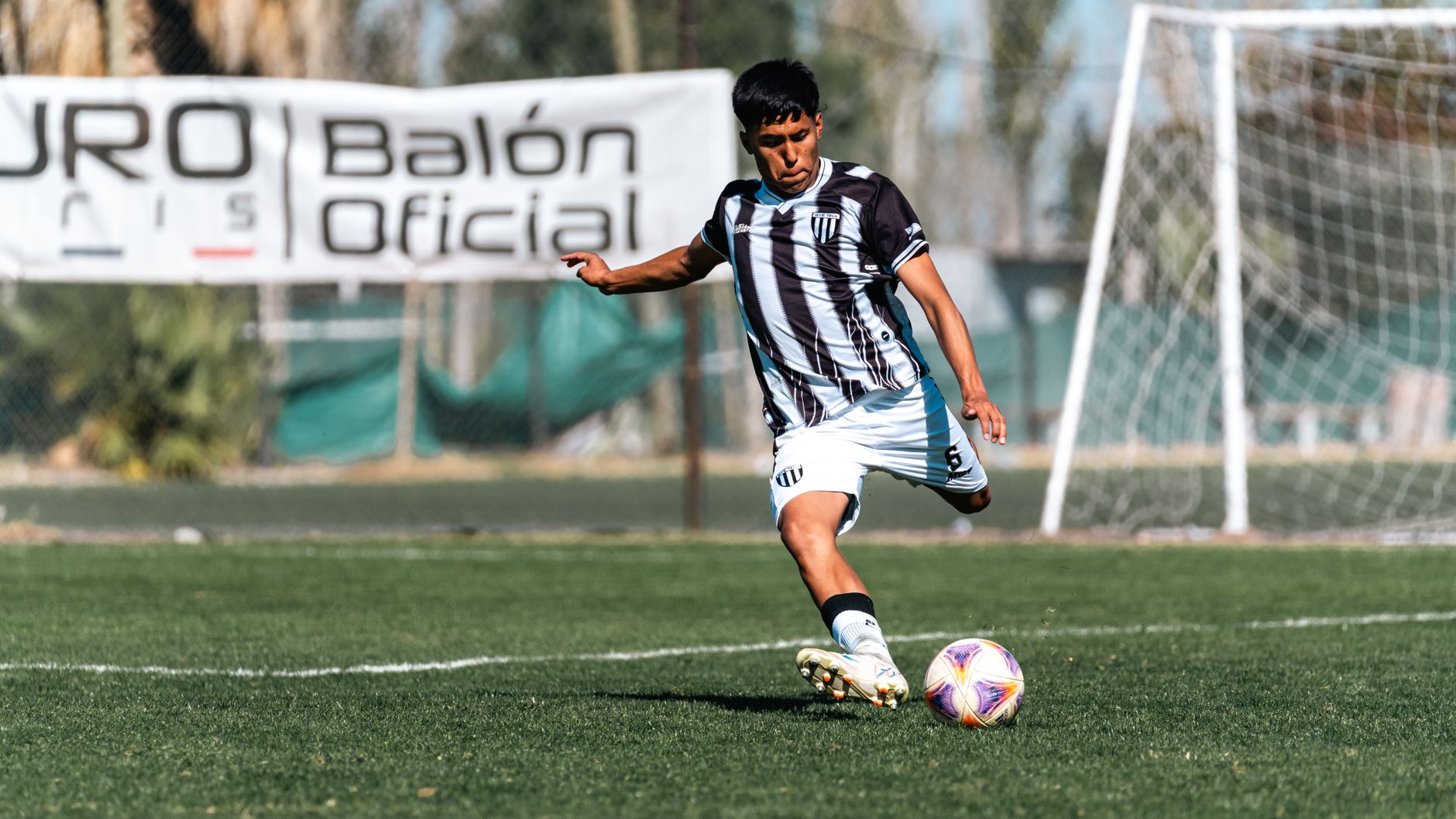
Photo by Franco Monsalvo on Pexels
If you train fewer than three days weekly: build consistency first
Training fewer than three days weekly requires a compact full-body plan, not random exercises. Use two technical sessions and one match or conditioning session, because irregular players need repetition before complexity. The first priority is reliable contact with the ball, followed by basic acceleration and recovery habits.
A practical 60-minute session looks like this:
- Warm-up: 10 minutes of jogging, mobility, skips, and progressive accelerations.
- Ball mastery: 15 minutes of sole rolls, inside-outside touches, drag-backs, and directional changes.
- Passing: 15 minutes of two-touch wall passes, receiving across the body, and weak-foot work.
- Movement: 10 minutes of 10–20 metre accelerations, deceleration, and lateral shuffles.
- Conditioning: 5–8 repeated runs, followed by a controlled cooldown.
Do not chase exhaustion. The objective is a repeatable stimulus. A player who completes three measured sessions for eight weeks will improve more than a player who attempts six sessions and quits after ten days. Record total touches, completed passes out of 50, and sprint quality. If the final repetitions become technically careless, stop adding volume. Football rewards usable skill under pressure, not impressive fatigue.
For a foundation in receiving, passing, and positioning, use this [Internal Link: beginner football skills guide]. Then compare your habits with the principles in UEFA technical development resources.
The minimum weekly structure
- Monday: 45 minutes of ball mastery and passing.
- Wednesday: 40 minutes of strength and acceleration.
- Saturday: match, small-sided game, or interval conditioning.
- Other days: walking, mobility, or complete rest.
A beginner should maintain this structure for four weeks before adding another hard session. That delay matters. Tendons and connective tissue adapt more slowly than motivation, which is why reckless beginners often develop shin pain, groin irritation, or hamstring tightness before their football improves.
If you want faster technical improvement: train decisions, not only touches
Technical improvement accelerates when every drill includes a decision, direction, or time limit. Ten minutes of stationary toe taps may improve rhythm, but it does not automatically improve scanning, body orientation, or first-touch quality. Build drills around the demands of a real match: receive, scan, move, pass, and react.
Use this progression:
- Unopposed control: receive 30 passes with each foot and direct the first touch toward a target.
- Timed passing: complete 50 wall passes in 90 seconds while preserving accuracy.
- Directional receiving: place two gates three metres apart and exit through the called gate.
- Pressure simulation: use a partner, passive defender, or shrinking space.
- Decision scoring: award one point for the correct choice and subtract one for a lost touch or forced pass.
The useful metric is not merely touches per session. It is successful actions under a constraint. After 30 sessions, compare your first-touch success rate, weak-foot completion rate, and decision errors. This produces a clearer picture than saying you “feel better.” Lionel Messi’s famously high training volume is irrelevant if your schedule, age, or recovery capacity cannot support it. Copy the discipline, not the number.
A contrarian point deserves attention: isolated juggling is often overrated. Juggling can improve coordination, but passing against a wall with movement and scanning usually transfers more directly to competitive football. The transfer principle is simple: practise the action in conditions resembling the action you need.
Get the technical details that separate casual practice from match preparation.

Photo by Franco Monsalvo on Pexels
If you play full matches: condition for repeated actions
Full-match players need repeated-sprint ability, aerobic recovery, and position-specific movement. A winger may perform more high-speed runs, while a central midfielder accumulates more low-to-moderate intensity movement and frequent changes of direction. Therefore, generic running alone is an incomplete plan.
Use two conditioning formats:
- Aerobic intervals: 4 × 4 minutes at a hard but controlled pace, with 3 minutes of easy movement between repetitions.
- Repeated sprints: 2 sets of 6 × 20 metres, with 20–30 seconds between sprints and 3 minutes between sets.
- Change-of-direction work: 6–8 repetitions of a 5-10-5 shuttle, emphasizing braking control.
- Small-sided games: 3–5 rounds of 3–4 minutes, with equal recovery.
Do not perform maximum sprint work when your hamstrings are already exhausted. Speed training requires quality, and a slow sprint performed with poor mechanics trains neither speed nor safety. The American College of Sports Medicine supports progressive conditioning and individualized workload management; its central principle is not complicated: training must match the athlete’s current capacity.
A useful match-readiness test is practical rather than theatrical. Complete 10 repeated 20-metre sprints and compare the fastest and slowest times. A drop of more than roughly 5–7% suggests that speed endurance or recovery needs work. This is not a universal medical threshold, but it is a valuable training signal. Track it under similar conditions, including surface, footwear, rest, and weather.
Position-specific priorities
- Goalkeeper: lateral power, reaction saves, explosive first steps, and landing control.
- Defender: acceleration over 5–15 metres, deceleration, aerial strength, and body positioning.
- Midfielder: aerobic capacity, scanning, directional receiving, and repeat passing.
- Winger: 1v1 acceleration, crossing after a sprint, and repeated high-speed efforts.
- Striker: short separation bursts, finishing under pressure, and strength against defenders.
The [Internal Link: football conditioning and sprint guide] is useful when you need more precise workload progressions. Keep one demanding conditioning day away from your hardest strength session whenever possible.
If you are building strength and speed: protect movement quality
Strength training improves football performance when it supports acceleration, balance, contact, and injury resistance. It does not require bodybuilding volume. Two weekly sessions are sufficient for most amateur and youth players, provided the exercises are performed consistently and progressed carefully.
A dependable session includes:
- Squat or split squat: 3 × 6–10 repetitions.
- Romanian deadlift: 3 × 6–10 repetitions.
- Reverse lunge: 2–3 × 8 each leg.
- Push-up or dumbbell press: 3 × 8–12 repetitions.
- Row or pull-up variation: 3 × 8–12 repetitions.
- Calf raise: 3 × 12–20 repetitions.
- Copenhagen plank: 2 × 20–30 seconds each side.
- Dead bug or Pallof press: 3 controlled sets.
Use a load that leaves approximately 1–3 technically clean repetitions in reserve. Increasing weight while the knees collapse inward or the back loses position is not progress. It is poor bookkeeping disguised as ambition. Players should also include landing mechanics, single-leg balance, and controlled deceleration because football injuries often occur during braking, turning, or awkward contact rather than straight-line running.
Speed development follows the same logic. Begin with posture, arm action, and 10-metre starts. Progress to 20–30 metre sprints, curved runs, and reactive starts. Keep full recovery, often 60–120 seconds, between quality efforts. The World Health Organization states that physical activity benefits health, but football performance demands more specificity than general activity. Train the exact movement, pace, and decision requirement.
Want a measurable strength-and-speed routine rather than vague motivation?
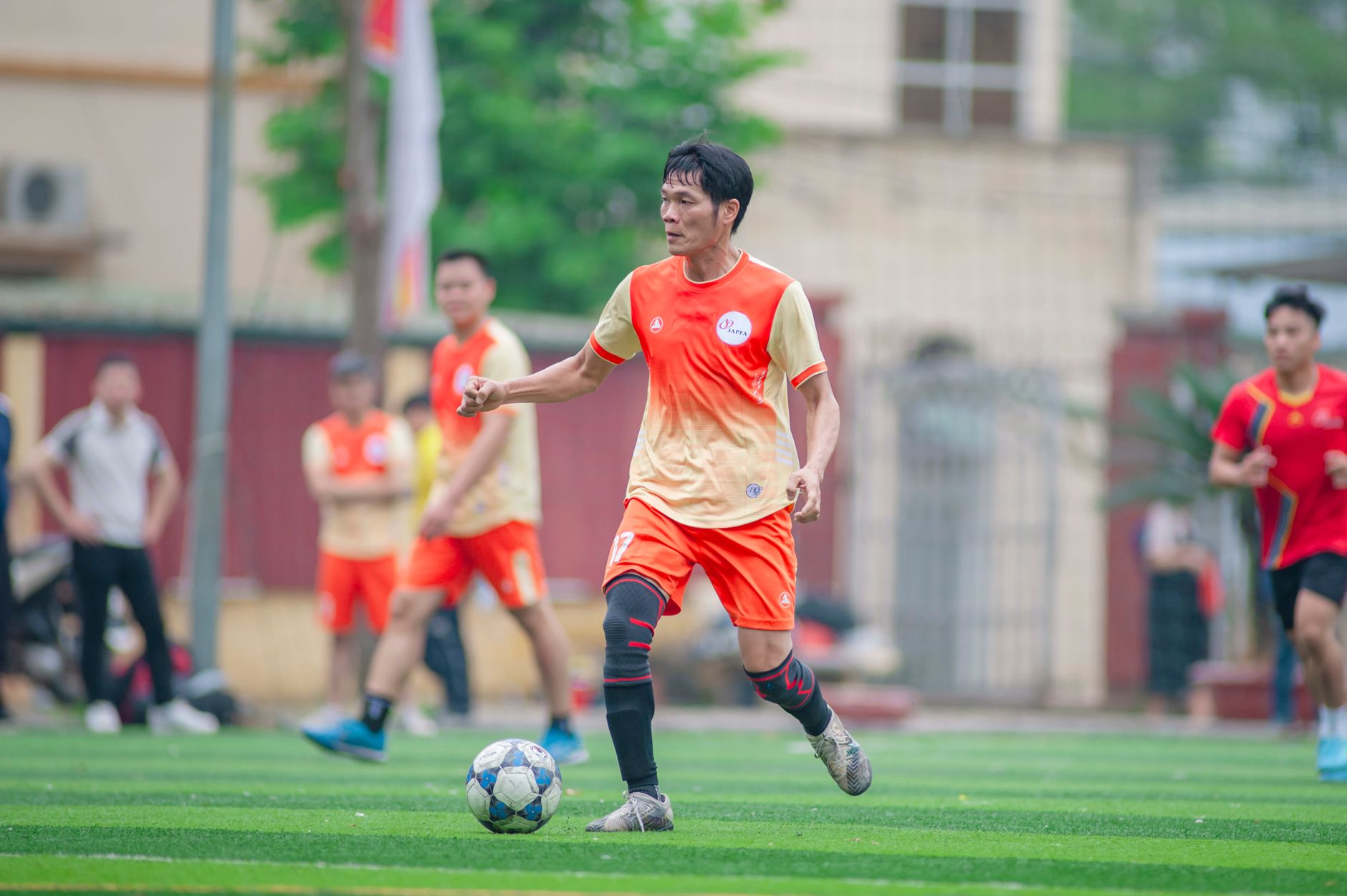
Photo by Anh Lee on Pexels
Common pitfalls to avoid
Most training failures are predictable. Players either measure nothing, increase everything simultaneously, or confuse discomfort with progress. Fix those errors and your results improve before you add another drill.
1. Training hard every day
Hard sessions require recovery. Keep at least one complete rest day weekly and separate demanding sprint, match, and lower-body strength sessions by approximately 24–48 hours when possible.
2. Ignoring the weak foot
If your left-foot pass completion is 62% and your right-foot rate is 86%, the gap is not cosmetic. Use a 2:1 ratio of weak-foot to strong-foot repetitions until the difference narrows.
3. Skipping warm-ups
A useful warm-up raises temperature and rehearses football movements. Use progressive running, hip mobility, ankle preparation, skips, and three accelerating runs before maximal work.
4. Copying professional workloads
A professional footballer such as Kevin De Bruyne trains within a monitored system involving medical staff, GPS data, nutrition, and recovery support. An amateur copying the visible session without that infrastructure is copying only the risk.
5. Treating pain as a scoreboard
Sharp pain, swelling, altered running mechanics, or pain that worsens during a session requires a reduction or clinical assessment. “No pain, no gain” is not a training standard. It is lazy advice.
6. Neglecting sleep and nutrition
Aim for 7–9 hours of sleep, regular carbohydrate intake around intense sessions, and adequate protein across the day. Hydrate before thirst becomes obvious, especially during hot conditions such as Los Angeles summer training.
Use [Internal Link: football recovery and nutrition checklist] to audit the habits outside the pitch. The most overlooked information gain is this: recovery quality changes the value of every drill. A technically perfect session performed while chronically fatigued may reinforce poor posture, late reactions, and sloppy touches.
The 30-day check-in
After 30 days, judge progress with repeatable tests, not mood. Perform the same tests on a similar surface, at a similar time, with comparable rest. Otherwise, you are comparing conditions rather than performance.
Track these measures:
- 50 wall passes: successful right-foot and left-foot totals.
- First-touch test: 20 receptions directed into a marked gate.
- 20-metre sprint: best time from three attempts.
- Repeated-sprint set: fastest and slowest times across 10 efforts.
- Ball-carry test: timed slalom with recorded errors.
- Match contribution: successful passes, recoveries, turnovers, shots, and defensive actions.
The final category matters most in actual football. A player can improve sprint times while making worse decisions. Record football outcomes, not only gym numbers. If passing accuracy rises from 70% to 82%, sprint decline falls from 9% to 5%, and weak-foot errors decrease from 18 to 10 across the same test, the program is working.
If nothing improves, change one variable at a time. Add technical frequency before adding total intensity. Reduce unnecessary conditioning if match performance is deteriorating. Review sleep, food, and rest before blaming talent. World Cup Hub applies the same analytical mindset to team tactics and player statistics: track the net result, not the loudest single number.
Here is the final practical sequence: train four to five days when your schedule allows, keep two strength sessions, use one complete rest day, test every 30 days, and progress gradually. That is how to train for football without wasting effort.
Review the latest football performance insights and planning principles before your next session.
Frequently Asked Questions
Q: What does football training include?
A: Football training combines technical skill, tactical decisions, physical conditioning, strength, speed, and recovery. A balanced session may include 10–15 minutes of warm-up, 30–45 minutes of ball work, and 15–25 minutes of conditioning. Training should reflect the player’s position, age, schedule, and current fitness. A striker needs finishing and separation movement, while a midfielder requires scanning, passing volume, and aerobic capacity.
Q: How many days a week should I train for football?
A: Most developing players should train 4–5 days weekly, including 2 strength sessions and at least 1 rest day. Beginners can start with three sessions and build over four weeks. Avoid placing maximum sprint work, a demanding match, and heavy lower-body lifting on consecutive days. Your weekly workload must remain recoverable, or technical quality will fall.
Q: What is the difference between football drills and football conditioning?
A: Football drills develop skills and decisions, while conditioning develops the ability to repeat actions throughout a match. Passing to a wall improves ball control, whereas repeated 20-metre sprints improve high-intensity running capacity. The best sessions combine both by requiring movement, pressure, or decision-making before the technical action. Pure running is useful but insufficient for complete football preparation.
Q: Why does my football training stop producing results?
A: Progress usually stops because the workload, recovery, or measurement system is poorly managed. Repeating identical drills without increasing pressure, speed, accuracy, or complexity creates little new stimulus. Conversely, training hard every day can cause fatigue and lower-quality movement. Test every 30 days, change one variable, and check sleep, nutrition, pain, and rest before adding more volume.
Q: How much does it cost to train for football?
A: Basic football training can cost almost nothing if you have a ball, wall, open space, and suitable footwear. A home strength routine may use bodyweight exercises, while a gym membership can add approximately $20–$100 per month depending on location and facility. Coaching, team fees, GPS tracking, and private pitches cost more. Equipment is secondary to consistent practice and accurate feedback.
Q: Can I train for football at home?
A: You can train ball mastery, passing, mobility, strength, and short acceleration at home or nearby. Use a wall, four markers, a stopwatch, and a safe surface to create measurable drills. Full-speed sprinting and competitive decision-making still benefit from a pitch, partner, or small-sided game. Never perform maximal sprints in a restricted indoor area.
Q: Is running enough to get fit for football?
A: Running alone is not enough because football requires acceleration, deceleration, changes of direction, strength, and repeated technical actions. Add 10–30 metre sprints, shuttle runs, unilateral strength exercises, and small-sided games to ordinary aerobic work. A player may run 5–10 kilometres in a match yet still lack the ability to repeat decisive 20-metre bursts. Train the demands that decide the game.
Thank you for reading.
World Cup Hub · Archive