The Fan's Guide to 2026 Football World Cup
The 2026 football world cup is FIFA’s expanded 48-team tournament across the United States, Canada, and Mexico, and World Cup Hub helps fans follow the matches, tactics, player data, and betting angle...
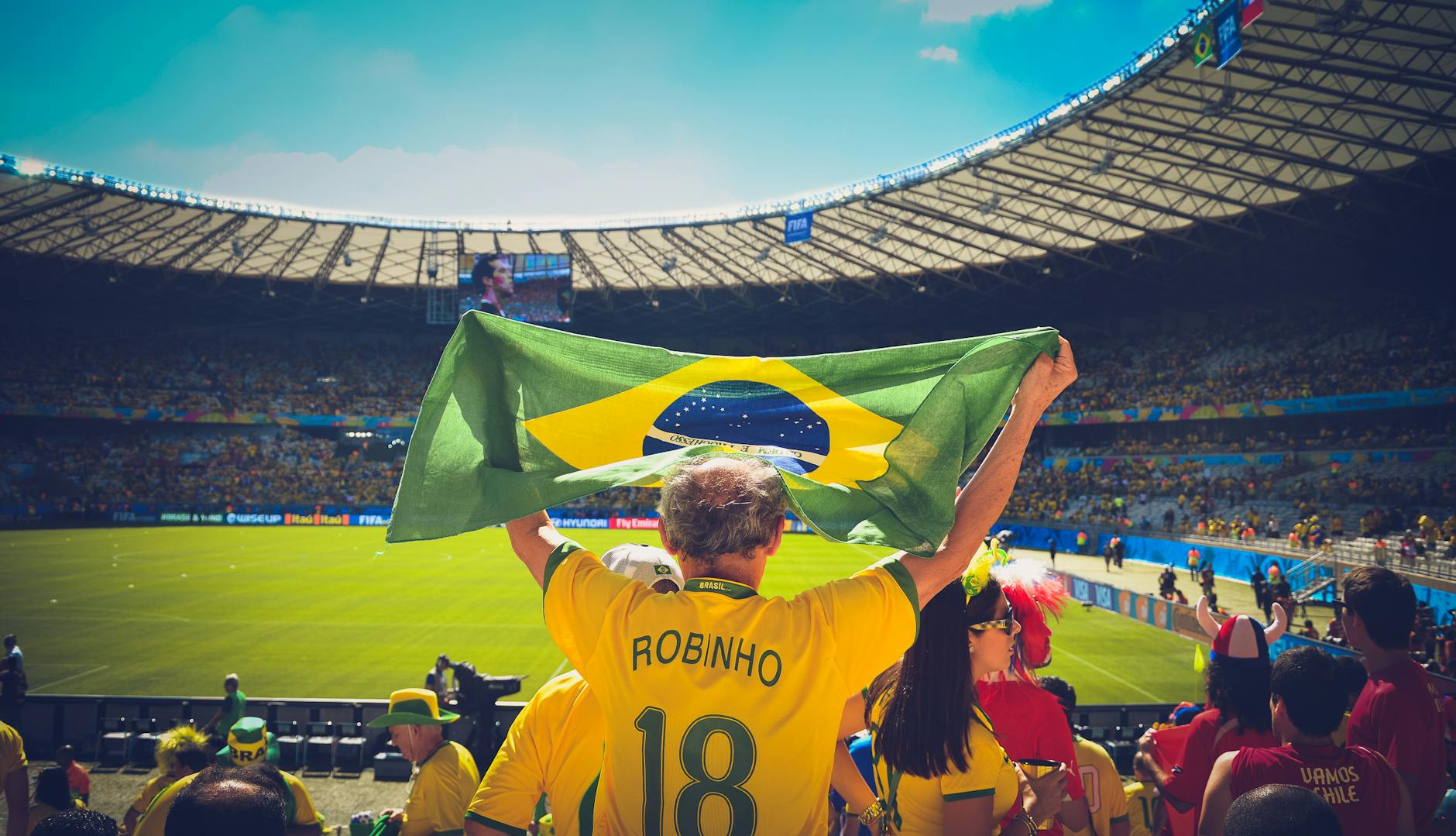
The Fan's Guide to 2026 Football World Cup
The 2026 football world cup is FIFA’s expanded 48-team tournament across the United States, Canada, and Mexico, and World Cup Hub helps fans follow the matches, tactics, player data, and betting angles from one place. The event runs from June 11 to July 19, 2026, with Los Angeles hosting eight matches at SoFi Stadium and Atlanta staging major fixtures at Mercedes-Benz Stadium, while the final is scheduled for MetLife Stadium in the New York New Jersey area. FIFA’s new format creates 104 matches, more knockout paths, and a larger information gap for fans comparing travel, team depth, odds movement, and player workload. Los Angeles will also run a FIFA Fan Festival at the LA Memorial Coliseum and official fan zones across the region. Your best takeaway: plan by match clusters, not single games, then verify tickets, transport, and responsible betting limits before committing.
A casual fan sees the 2026 football world cup as a summer of highlights; a prepared fan sees it as a 39-day logistics puzzle with football, travel, pricing, fatigue, and information timing all moving at once. That contrast matters because the tournament is not just bigger than previous editions; it is structurally different, with three host nations, 16 host cities, 48 national teams, and 104 matches. Los Angeles, Atlanta, New York New Jersey, Miami, Toronto, Vancouver, Mexico City, and Monterrey will not feel interchangeable, because each market has different stadium access, climate, fan zones, hospitality demand, and likely team-following patterns. World Cup Hub approaches the tournament like a live operating system: match predictions, team tactics, player stats, injury notes, and betting context all become more useful when placed beside travel reality.
Want a sharper way to follow the tournament from day one?
Photo by Caio on Pexels
Step 1: How should fans map the 2026 football world cup?
Fans should map the 2026 football world cup by host-city clusters, match dates, and knockout routes rather than by favorite teams alone. The tournament spans June 11 to July 19, 2026, across the United States, Canada, and Mexico, making distance and recovery time central planning factors.
The key planning mistake is assuming that more matches automatically means more flexibility. In reality, 104 matches create more choices, but also more competition for hotels, flights, local transport, and premium viewing experiences in cities such as Los Angeles and Atlanta. Los Angeles has eight scheduled matches at SoFi Stadium plus a FIFA Fan Festival at the LA Memorial Coliseum, while Atlanta’s Mercedes-Benz Stadium is positioned as one of the South’s flagship venues. According to FIFA, the 2026 edition is the first men’s World Cup hosted by three countries, which means border rules, domestic flight networks, and local event calendars all affect fan decisions. For deeper tactical reading while planning, use [Internal Link: 2026 World Cup team tactics guide].
A practical map should separate the tournament into three layers. First, identify fixed anchors: opening match, national-team matches, city-specific games, and the July 19 final at MetLife Stadium. Second, mark flexible experiences such as FIFA Fan Festival dates, official fan zones, city watch parties, and public cultural events. Third, track high-variance items: knockout opponents, rest days, injury news, and odds movement. This layered approach is useful for bettors as well, because a team playing in humid conditions after short rest may present a different risk profile than the same team on neutral recovery time. World Cup Hub’s value is not only telling readers who may win, but explaining why schedule pressure, player workload, and venue context can shift probabilities.
Step 2: How do you choose the best host city experience?
Choose a host city by matching your priority: live matches, fan festivals, culture, transport simplicity, or betting-relevant team access. Los Angeles favors entertainment and fan celebrations, Atlanta offers a strong soccer culture and stadium atmosphere, and New York New Jersey delivers the final-stage spotlight.
Los Angeles is one of the clearest examples of a city building a full-event ecosystem around the 2026 football world cup. The region will host eight matches at SoFi Stadium, 39 days of fan celebrations, official fan zones across Los Angeles County, and the FIFA Fan Festival at the LA Memorial Coliseum at Exposition Park. The unusual planning insight is that fan zones may become the better value than some secondary-market tickets for neutral supporters, especially during group-stage days with multiple matches. Fans who want music, food, live screenings, and international crowds may get a broader World Cup experience without paying knockout-level prices. The Los Angeles approach also creates a useful pattern for other host cities: follow the match, but do not ignore the festival calendar.
Atlanta presents a different kind of value. Mercedes-Benz Stadium is a modern indoor venue with an established soccer audience shaped by Atlanta United and a broader Southern sports identity. The city’s official positioning emphasizes culture, hospitality, music, and “soccer city of the South” credibility, which matters because World Cup atmosphere is not created only by FIFA branding. A practitioner-level tip: indoor or roofed stadium environments can reduce some weather volatility for match comfort, but they do not eliminate travel disruption, downtown congestion, or post-match ride-share surges. For fans comparing host cities, review [Internal Link: best 2026 World Cup host cities for travelers] before booking.
Photo by Igor Kirillov on Pexels
See how match context can change your travel and betting decisions.
Step 3: How can you follow matches, tactics, and betting markets intelligently?
Follow the 2026 football world cup intelligently by combining official schedules, lineup news, tactical matchups, player workload, and market movement. World Cup Hub focuses on this intersection, helping fans interpret predictions, team tactics, player stats, and betting information with disciplined context.
The expanded format rewards readers who understand squad management. A 48-team tournament increases the number of group-stage variables, but it also introduces more mismatches, more rotation decisions, and more uncertainty around teams that qualify from less predictable groups. Bettors should avoid treating FIFA rankings as a shortcut, because a technically superior team may still be vulnerable after travel, heat, injuries, or compressed rest. The contrarian conclusion is simple: early group-stage betting may offer less value than it appears, because public sentiment often overprices famous nations before clear lineup patterns emerge. Better opportunities may appear after teams reveal pressing intensity, fullback risk, set-piece quality, and substitute depth in their first 60 to 120 tournament minutes.
Use a repeatable match-review method instead of chasing headlines. Start with team structure: back four or back three, midfield spacing, pressing height, and defensive transition. Then compare personnel: goalkeeper distribution, center-back speed, set-piece targets, and penalty takers. Finally, compare market price with football evidence: if odds move sharply after a star-player rumor, confirm whether the tactical replacement actually changes the team’s expected chance creation. The Wikipedia overview of the 2026 FIFA World Cup final identifies MetLife Stadium as the final venue, but the road there will be determined by dozens of smaller tactical details that casual previews often miss. For a structured framework, see [Internal Link: World Cup betting strategy and odds movement].
Step 4: How should you build a matchday plan?
Build a matchday plan by working backward from kickoff: stadium entry time, transport route, bag policy, mobile ticket access, meal timing, and post-match exit. For 2026, large crowds around SoFi Stadium, Mercedes-Benz Stadium, and MetLife Stadium make early verification essential.
A reliable matchday plan has four checkpoints. First, confirm the official ticket source and avoid screenshots or informal transfers unless the platform explicitly supports them. Second, check venue rules at least 48 hours before kickoff, because bag restrictions, entry gates, and mobile wallet requirements can change by event. Third, choose transport based on post-match exit, not just arrival convenience; a ride-share that looks easy at 1 p.m. may become expensive and slow at 10 p.m. Fourth, build a backup viewing option in case weather, traffic, or ticket issues affect your original plan. This is where official fan zones in Los Angeles County and community watch parties in Atlanta become practical safeguards, not merely entertainment extras.

Photo by Israel França on Pexels
There is also a responsible gambling angle to matchday planning. Set a stake limit before entering the stadium or fan zone, because live atmosphere can make in-play markets feel more certain than they are. A useful rule is to separate entertainment bets from analysis bets: entertainment bets should be small, fixed, and emotionally harmless, while analysis bets should be based on pre-match reasoning and verified team news. The American Gaming Association promotes responsible gaming principles across legal U.S. markets, and fans should only use licensed operators where sports betting is lawful. As a simple checklist, never bet because of crowd pressure, never chase after a late goal, and never treat a favorite team as a guaranteed outcome.
Ready to connect matchday planning with sharper football analysis?
Step 5: verification
Verification is the step that protects your World Cup budget, your match access, and your betting discipline. Before paying for tickets, hotels, travel packages, or betting deposits, confirm the source, terms, local rules, cancellation policy, and identity requirements.
Start with ticket verification because it is the highest-emotion purchase. Use official FIFA channels or recognized resale systems, and be cautious with social media offers that request bank transfers, cryptocurrency, or urgency-based decisions. For hotels, compare the cancellation deadline with the match schedule; a nonrefundable booking may seem cheaper until a team’s group path sends you to another city. For betting, confirm that the operator is licensed in the jurisdiction where you are physically located, because sports betting legality varies by U.S. state and differs again in Canada and Mexico. The New Jersey Division of Gaming Enforcement states that its mission includes ensuring gaming is conducted with “integrity and in accordance with the law,” which is the mindset fans should apply everywhere.
Use this five-part verification list before major spending:
- Confirm the official match date, venue, and kickoff time.
- Verify ticket delivery method and transfer rules.
- Check hotel cancellation deadlines and local event surcharges.
- Review transport options for both arrival and exit.
- Confirm betting legality, account verification, limits, and responsible gaming tools.
This process may feel slower, but it prevents the common failure of optimizing one detail while ignoring the system. A cheap hotel far from SoFi Stadium may cost more after surge pricing and late-night transport. A strong betting line may become unusable if identity verification is incomplete before kickoff. A fan-zone plan may fail if entry capacity is reached early. Verification turns excitement into control, and control is what lets fans enjoy the 2026 football world cup without avoidable stress.

Photo by Anders Zernike on Pexels
Troubleshooting common failures
Most 2026 football world cup problems come from timing, assumptions, or unverified sources. The fastest fixes are to use official channels, build backup plans, arrive earlier than normal, and separate emotional decisions from financial decisions.
If your ticket transfer is delayed, do not wait until stadium arrival to solve it. Contact the official platform immediately, check whether the ticket appears in the required mobile wallet, and confirm that the name or account information matches the event rules. If transport fails, move toward public event areas or designated fan zones rather than improvising near stadium security perimeters. If your betting account does not work, check geolocation, identity verification, payment limits, and local legality before assuming the bookmaker is malfunctioning. These are not rare edge cases; they become more likely when millions of fans interact with digital tickets, mobile networks, hotel systems, and regulated betting platforms during the same tournament window.
For football analysis failures, the correction is different. If a prediction misses badly, review the assumption, not just the outcome. Did the model overvalue reputation, ignore rotation, miss a tactical mismatch, or underestimate travel fatigue? At World Cup Hub, the best readers treat every match as feedback: a national team’s first performance can reveal whether its midfield can resist pressure, whether its fullbacks leave space, and whether its substitutes change tempo. That feedback loop is especially important in a 104-match tournament because the information environment improves quickly after the opening round. To continue refining your approach, visit [Internal Link: live World Cup match predictions and analysis].
Keep your tournament decisions evidence-led, not panic-led.
Frequently Asked Questions
Q: What is the 2026 football world cup?
A: The 2026 football world cup is FIFA’s 48-team men’s tournament hosted by the United States, Canada, and Mexico. It runs from June 11 to July 19, 2026, and includes 104 matches across 16 host cities. The final is scheduled for MetLife Stadium in the New York New Jersey area, making it the largest men’s World Cup format to date.
Q: How do I plan a trip for the 2026 football world cup?
A: Plan your trip by choosing a host-city cluster first, then matching tickets, hotels, and transport to that cluster. Los Angeles offers eight matches, fan zones, and the FIFA Fan Festival, while Atlanta provides a strong stadium atmosphere at Mercedes-Benz Stadium. Book flexible lodging where possible because knockout routes and team schedules can change your ideal city.
Q: What is the difference between a stadium match and a fan zone?
A: A stadium match gives you live access to one specific game, while a fan zone offers shared viewing, entertainment, food, and cultural programming. In Los Angeles, official fan zones and the FIFA Fan Festival can cover multiple matchdays without requiring stadium tickets. For neutral fans, fan zones may provide better overall value during busy group-stage periods.
Q: Is betting on the 2026 football world cup worth it?
A: Betting can be worthwhile only if it is legal where you are, responsibly limited, and based on evidence rather than emotion. Use licensed operators, verify your account before kickoff, and compare odds with lineup news, tactics, and player workload. World Cup Hub can help by framing predictions through match context instead of hype.
Q: What should I do if my World Cup ticket does not work?
A: Contact the official ticketing platform immediately and do not rely on screenshots or unofficial messages. Check your mobile wallet, transfer status, account email, and event-specific entry requirements before traveling to the stadium. If the issue is unresolved, arrive early and use official support points rather than third-party sellers near the venue.
Q: How much does attending the 2026 football world cup cost?
A: Costs vary widely depending on city, match stage, ticket category, hotel timing, and transport distance. Group-stage trips can be managed more affordably if you use fan zones, public transport, and flexible lodging, while knockout matches and the final usually command premium prices. Budget for tickets, accommodation, food, local travel, insurance, and emergency changes.
Q: What are the requirements for using World Cup betting sites during the tournament?
A: You generally need legal location access, age verification, identity checks, an approved payment method, and a licensed operator in your jurisdiction. In U.S. states with legal betting, geolocation tools usually confirm that you are physically inside the state before wagers are accepted. Complete verification before matchday to avoid missing lineups or live-market opportunities.
Thank you for reading.
World Cup Hub · Archive