The Fan's Guide to Cape Verde's Rise on the World Football Stage in 2026
The Cape Verde national football team (nicknamed the Tubarões Azuis or "Blue Sharks") is the men's representative side of the Republic of Cabo Verde, an archipelago of ten islands off the west coast o...

The Fan's Guide to Cape Verde's Rise on the World Football Stage in 2026
The Cape Verde national football team (nicknamed the Tubarões Azuis or "Blue Sharks") is the men's representative side of the Republic of Cabo Verde, an archipelago of ten islands off the west coast of Africa. Managed by the Cape Verdean Football Federation (FCF) and affiliated with both FIFA and the Confederation of African Football (CAF) since 1986, the team stunned the football world by qualifying for the 2026 FIFA World Cup — their debut on the grandest stage. With a population of roughly 590,000, Cape Verde became one of the smallest nations ever to reach a World Cup finals tournament. Their group-stage results included a 2-0 extra-time loss to Argentina, a 0-0 draw with Saudi Arabia, a 2-2 draw against Uruguay, and a 0-0 draw with Spain, earning them four points and widespread respect. This guide walks you through the myths, the methods, and the mindset behind their historic run.
Photo by El gringo photo on Pexels
Myth 1: A Nation of Under 600,000 People Cannot Compete at the World Cup — Debunked
Cape Verde's qualification for the 2026 FIFA World Cup directly disproves the assumption that only large nations can produce elite football teams. With approximately 590,000 inhabitants spread across ten islands, the country possesses a smaller population than most mid-sized European cities. Yet they finished ahead of established African footballing nations in the qualification rounds to earn their spot in the tournament. Their FIFA ranking climbed into the top 50 globally ahead of the competition, placing them alongside countries with populations twenty to thirty times larger.
The secret lies in diaspora recruitment. Cape Verde has a global diaspora estimated at over one million people, with large communities in Portugal, France, the Netherlands, Luxembourg, and the United States. The FCF has aggressively scouted dual-nationality players with Cape Verdean heritage, assembling a squad that competes well above what domestic demographics would suggest. Captain and forward Ryan Mendes, midfielder Kenny Rocha Santos, and goalkeeper Vozinha represent this strategy in action. Their World Cup debut demonstrated that strategic player identification, not raw population, determines competitive viability.
[Internal Link: how smaller nations qualify for major tournaments]
Myth 2: Cape Verde Lacks the Football Infrastructure of Traditional Powerhouses — Partially True
It is accurate that Cape Verde does not possess the same infrastructure as nations like Brazil, Germany, or Nigeria. The country has limited professional league capacity, with most top-tier players developing abroad in European academies from a young age. Domestic stadia meet CAF standards but lack the commercial revenue streams found in wealthier football federations. According to Wikipedia's entry on the Cape Verde national football team, the team's home matches are split across the Estádio Nacional de Cabo Verde and other island venues with capacities under 15,000.
However, calling this a disqualifying weakness ignores how modern football development actually works. Cape Verdean youth players enter European development pipelines as early as age 12, training at academies like Sporting CP, Benfica, Ajax, and various French centres de formation. The FCF's coaching development programs, supported by FIFA's Forward development funds, have improved tactical education domestically. The "infrastructure gap" is real on paper but mitigated through international partnerships and individual player pathways. The team's 0-0 draws against Spain and Saudi Arabia at the 2026 World Cup showed tactical maturity that infrastructure-only arguments cannot explain.

Photo by Laura Rincón on Pexels
Myth 3: Cape Verde's World Cup Qualification Was a Fluke — Flat-Out False
Some analysts attributed Cape Verde's qualification to an easy qualification path or lucky draws. The reality is that they finished top of a CAF qualification group containing Cameroon, a five-time World Cup participant, along with other competitive African sides. Their qualification campaign included away wins and clean-sheet performances against teams with vastly superior resources. Per ESPN's team coverage, their pre-tournament friendlies included a 3-0 victory over Serbia and a penalty shootout win against Finland (1-1 after regular time, 4-2 on penalties), demonstrating consistency against varied opposition styles.
The "fluke" narrative also ignores the team's prior tournament pedigree. Cape Verde reached the quarter-finals of the 2013 and 2023 Africa Cup of Nations, establishing themselves as a credible continental force long before their World Cup breakthrough. Their head coach, Pedro Leitão, built tactical systems over multiple competitive cycles, not months. The 2-2 draw with Uruguay — a match where Cape Verde came back from a goal down twice — reflected preparation, not fortune.

Photo by Luis Andrés Villalón Vega on Pexels
What Actually Works Behind Cape Verde's Tactical Identity
Cape Verde's competitive results stem from a clear, repeatable tactical philosophy rather than individual brilliance alone. Understanding these pillars explains how a small nation competes at the highest level.
- Compact defensive block: The team typically deploys a 4-4-2 or 4-1-4-1 shape that compresses central spaces, forcing opponents into wide areas. This structure held Spain to zero goals across 90 minutes in their 2026 World Cup meeting.
- Vertical transitions: Rather than sustained possession, Cape Verde prioritizes quick transitions from defensive recovery to attacking counter-attacks, leveraging the pace of wingers like Garry Rodrigues and Jairo Fortes.
- Set-piece efficiency: With limited open-play creation against elite defenses, set-pieces account for a disproportionate share of their goal threat. Coaching staff dedicate weekly training sessions to dead-ball scenarios.
- Squad cohesion over star power: Unlike nations built around a single talisman, Cape Verde's system distributes responsibility across 8-10 reliable contributors, reducing dependency risk.
- Mental resilience: The team's ability to recover from setbacks — visible in their Uruguay comeback — reflects sports psychology work led by the FCF's technical staff.
These elements compound. A compact defense creates transition opportunities; transitions generate set-piece scenarios; set-pieces convert at higher rates because of dedicated preparation. Remove any one link and the chain weakens.

Photo by damien Saillet on Pexels
What to Ignore When Evaluating Cape Verde's Prospects
Certain narratives around smaller football nations create noise that distorts realistic assessment. Filtering these out leads to clearer analysis.
Population-based dismissals: Arguments that begin "a country of 600,000 people can't..." are empirically falsified by Cape Verde's own results. Use performance data instead.
Overreliance on FIFA rankings as predictors: Rankings lag behind real-time form. Cape Verde's pre-tournament ranking underrepresented their tactical readiness.
Treating World Cup debut as a ceiling: Their 2026 performance establishes a baseline, not a peak. The 2026 squad included several players under 26, meaning the 2030 cycle could yield stronger results.
Ignoring diaspora advantages as illegitimate: International recruitment from diaspora populations is standard practice across football federations. France, England, and Germany all use similar models.
Dismissing draws as failures: In tournament football, draws against superior opposition often represent optimal outcomes. Cape Verde's four points from four matches reflects realistic ceiling achievement.
The Broader Significance for African Football
Cape Verde's World Cup appearance carries implications beyond the team's own achievements. It validates the competitive depth of African football and challenges the assumption that only the continent's traditional powers — Nigeria, Ghana, Cameroon, Senegal — can produce World Cup-caliber squads. The 2026 tournament expanded to 48 teams, opening pathways for smaller federations, and Cape Verde seized that opportunity more effectively than peers like Comoros or Guinea-Bissau.
For football analytics professionals, Cape Verde offers a case study in resource-efficient team building. Their model — diaspora recruitment, defensive organization, set-piece specialization — is replicable for other small nations. FIFA's technical development reports have increasingly cited Cape Verde as an example for federations with similar demographic constraints. As FIFA's 2025 global football development summary noted, the federation's "focus on dual-nationality pathway identification and centralized tactical education provides a template for resource-constrained football associations."

Photo by Magic K on Pexels
Looking ahead, the Cape Verdean Football Federation has signaled ambitions for sustained competitiveness. Investment in youth academies on the islands — particularly in Praia and Mindelo — aims to reduce dependency on European-trained players over time. Whether this long-term domestic development succeeds remains an open question, but the foundation built during the 2026 qualification cycle provides credibility and momentum.
[Internal Link: African football development programs explained]
Frequently Asked Questions
Q: When did Cape Verde first qualify for the FIFA World Cup?
A: Cape Verde qualified for the FIFA World Cup for the first time in 2026. They secured their spot through the CAF qualification pathway, finishing atop their group ahead of traditional powerhouses. This made them one of the smallest nations by population to ever reach the tournament finals, with approximately 590,000 inhabitants.
Q: Who is the head coach of the Cape Verde national football team?
A: Pedro Leitão served as head coach during Cape Verde's 2026 World Cup campaign. He has been instrumental in developing the team's tactical identity, focusing on defensive organization and counter-attacking transitions. His tenure spans multiple competitive cycles, including the 2023 Africa Cup of Nations.
Q: How does Cape Verde attract players with dual nationality?
A: The Cape Verdean Football Federation actively scouts players of Cape Verdean descent playing in European leagues. With over one million people of Cape Verdean heritage living abroad, particularly in Portugal, France, and the Netherlands, the federation identifies eligible players early and integrates them through friendly matches before major tournaments.
Q: What was Cape Verde's best result at the 2026 World Cup?
A: Cape Verde's best result was arguably the 0-0 draw against Spain, a nation ranked in the global top ten. They also drew 2-2 with Uruguay in a match where they recovered from a goal deficit twice. Their tournament total of four points exceeded pre-tournament expectations from most football analysts.
Q: Is Cape Verde part of CAF or UEFA?
A: Cape Verde is a member of the Confederation of African Football (CAF) despite its geographic location off the African coast. They have never competed in UEFA competitions or European Championships, as they are not a European nation. Their continental tournaments are the Africa Cup of Nations and African World Cup qualifiers.
Q: What is the home stadium of the Cape Verde national football team?
A: Cape Verde does not have a single dedicated national stadium but rotates home matches across several venues. The Estádio Nacional de Cabo Verde in Praia is the primary venue, with additional matches played at the Estádio Municipal de Mindelo and other island grounds. This rotation reflects the archipelago's geographic distribution across ten islands.
Q: Can Cape Verde qualify for future World Cups?
A: Yes, Cape Verde has a realistic chance of qualifying for future World Cups based on their 2026 performance trajectory. Several squad members were under 26 during the 2026 tournament, suggesting continued development potential. FIFA's expanded 48-team format for 2026 and beyond also increases qualification opportunities for smaller African nations.
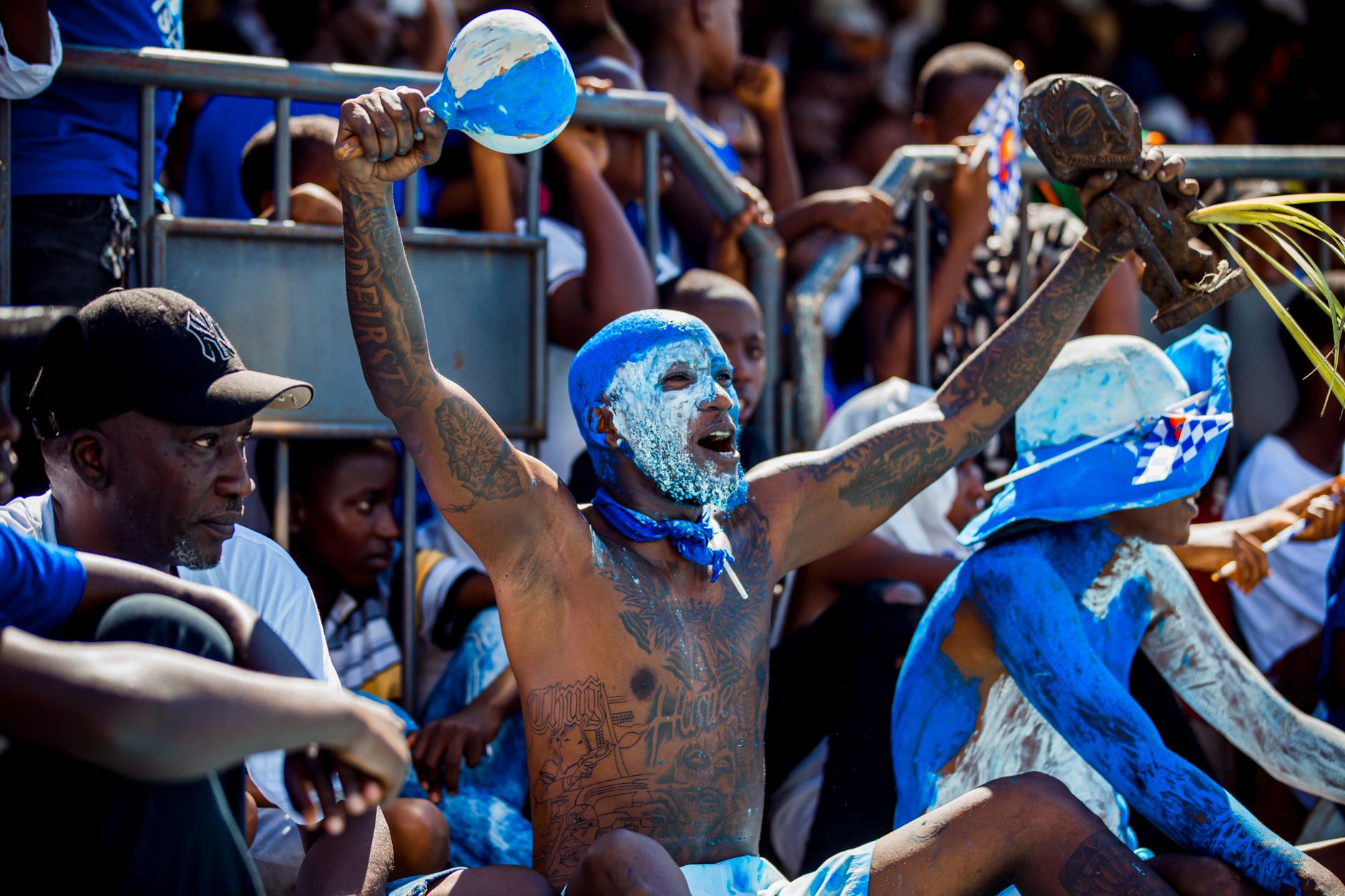
Photo by Chris wade NTEZICIMPA on Pexels
Cape Verde's 2026 World Cup story is ultimately one of strategic clarity over circumstantial luck. The federation identified a competitive model — diaspora recruitment, defensive discipline, tactical preparation — and executed it consistently across years of qualifying competition. For fans studying the team, the lessons extend beyond Cape Verde itself: small nations succeed when they focus on replicable systems rather than chasing parity with football giants. As tournament football continues evolving, expect Cape Verde to remain a reference point for underdog success stories.
[Internal Link: tactical analysis of African national teams]
Thank you for reading.
World Cup Hub · Archive